


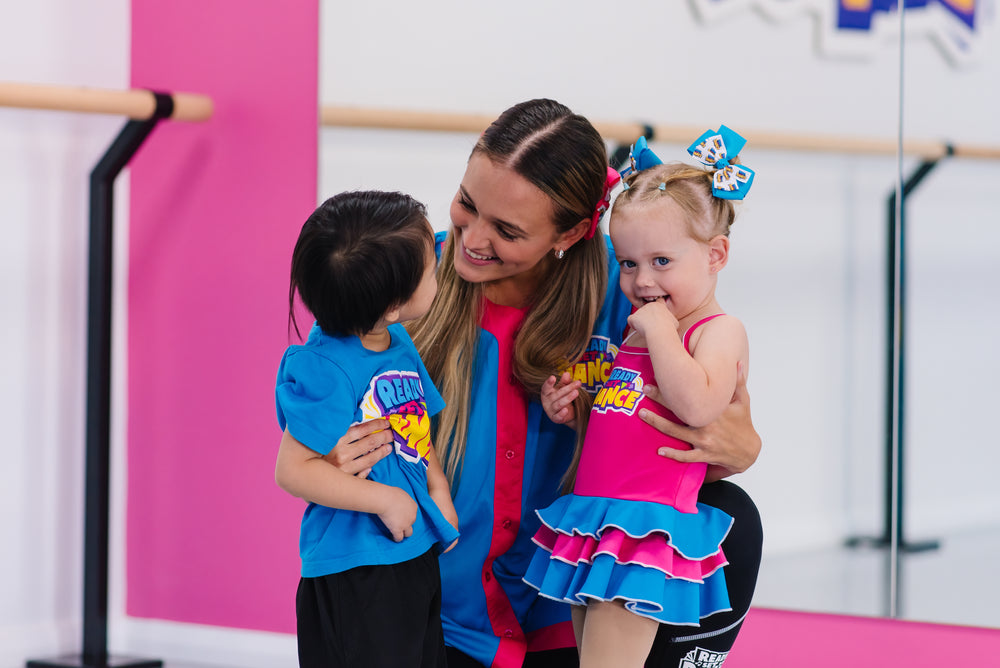
Fun on Your Feet: Mastering Fundamental Movement Skills, Early Childhood Style!

The Building Blocks of Active Lives: Unleashing Potential Through Dance
There is something truly magical about watching a child discover what their body can do! From their very first unsteady steps to leaping across the living room, the early years are a spectacular window of discovery. For parents, watching this journey unfold is pure joy, but did you know there is a secret superpower hidden inside all that playful motion? It’s called physical literacy!
At Ready Set Dance, we believe that human movement is the ultimate form of self-expression and the foundation for a healthy, vibrant life. While our classes look like a whirlwind of music, laughter, and bright props, they are secretly a carefully structured playground where children build the essential physical capabilities they need for the future.
By encouraging physical activity early on, we are not just teaching dance steps; we are handing kids the keys to a lifetime of sport and physical activity with total confidence!
Decoding FMS: What Are Fundamental Movement Skills in Early Childhood?
When early childhood educators and paediatric specialists talk about physical development, they often point to a specific set of abilities known as fundamental movement skills (FMS). These are the foundational skills that allow young learners to navigate the world safely, smoothly, and successfully.
Think of these movement skills as the alphabet of physical health. Just like learning letters before writing a story, children master these basic movements before they can confidently dive into schoolyard sports, playground games, and recreational hobbies at different ages and stages.
To make skill development easy to understand, experts generally break these fundamental movement skills down into three groups:
-
Locomotor skills: Moving the entire body from one point to another, like jumping, skipping, and running.
-
Stability skills: Mastering balance, posture, and control while stationary or in motion.
-
Object control skills (also known as manipulative skills): Managing external items with hands or feet, which includes actions like catching, throwing, kicking, and striking.
Every little learner develops at different rates, but during the preschool years, providing a safe, high-energy environment to practise these movements makes all the difference!
From Studio Steps to Playground Triumphs: The Big Four Competencies
Our structured dance programs are beautifully designed to target the core competencies that underpin a child's growth and long-term participation in active play.
As Senior Occupational Therapist Nicole Katzenellenbogen states, “Being part of a dance class from an early age teaches children to work alongside their friends and have fun, while working on essential developmental milestones that help higher-order skills.”
These four movement areas form the foundation of physical literacy and are naturally developed through every Ready Set Dance class. Let’s look at how the magic of dance connects directly to the major physical milestones:
Running & Locomotion: Charging Ahead with Confidence
Before a child can dash across a soccer field, they need to understand how their body parts work together in motion. In our studio, locomotor skills are baked into every rhythm! As children change directions to match a fast-paced beat, pump their arms, and navigate around their dance peers, they are secretly developing the coordination that supports efficient running.
Jumping & Leaping: Reaching New Heights
Jumping requires explosive power, timing, and an understanding of safe landings. Whether our little dancers are popping up like popcorn or leaping over imaginary puddles, they are learning how to bend their knees, use their momentum, and absorb impact safely. This builds incredible lower-body strength and spatial awareness.
Balancing & Stability: Finding the Centre
Stability skills are the core of all fundamental movements. Through playful “freeze” games and balancing on one foot like a beautiful flamingo, children activate their core muscles. This internal stability ensures they can stand steady, tip their heads down without falling, and move through a busy playground without bumping into others.
Throwing & Object Control: The Secret Power of Prop Play
You might wonder: how does a dance class teach object control without a stationary ball or a baseball bat? The answer lies in our imaginative equipment and resources! When toddlers wave colourful ribbons, catch falling scarves, or shake maracas to the rhythm, they are actively sharpening their hand-eye coordination. These engaging actions lay an excellent foundation for mastering underarm throwing, overarm throwing, and catching later in school.
The Educator's Lens: Why Structured Dance Beats Standard Play
While free play at the park is wonderful for general health, structured dance classes offer something uniquely powerful. Our targeted programs provide an intentional layout where educators and teachers can guide children through a balanced mix of physical challenges.
When we encourage children to copy structured choreography patterns, we are engaging both their minds and their bodies. This intentional combination helps develop confidence as kids learn to predict sequences, follow instructions, and master their physical boundaries.
With a clear focus on making learning fun, our classes provide the repetitive practice little bodies crave to truly master FMS, turning early physical milestones into permanent, joyous habits!
The Schoolyard Head Start: Prepping for Big School Success
The transition to formal schooling is a massive milestone, and having a strong physical foundation makes a world of difference. Our classes are designed to ensure your little one steps into that big new world fully prepared!
Through our targeted programs, kids aren't just learning how to follow a beat; they are gaining the physical capabilities required for the school curriculum. The early childhood fundamental movement skills mastered in the studio directly translate to success in school sports, physical education classes, and playground games.
When a child has already developed strong locomotor skills and stability skills with us, they won't feel intimidated when it's time to join in on schoolyard games.
Instead, they can jump right into the fun with their new peers, showing off the coordination, focus, and physical control they developed on the dance floor. By investing in their skill development during the early years, you are giving them a strong foundation to thrive socially and physically from their very first day of school!
Ready, Set, FMS! Fun Activities Where Kids Master the Basics
Wondering how all this development looks on the studio floor? Here are some of our absolute favourite, high-energy activities across Ready Set Move and Ready Set Acro that make fundamental movement feel like an absolute party:
-
Animal Imagination Adventures: Stomping like heavy bears or soaring like birds allows children to explore different speeds and tempos while building total-body strength and gross motor movements.
-
The Ultimate Freeze Challenge: Moving to high-energy tracks and stopping instantly on a musical cue is a crowd favourite that builds incredible body control, active listening, and instant stability.
-
Catch the Shooting Star: Twirling, tracking, and snatching colourful scarves out of the air is our favourite way to encourage early object control and hand-eye coordination without the frustration of heavy balls.
A Foundation for Life: Developing Total-Body Confidence
Across the early childhood journey, the benefits of structured movement stretch far beyond the studio walls. When a child feels completely confident in their physical abilities, it triggers a beautiful chain reaction. They are more likely to raise their hand for school sports, dive into playground games with peers, and approach the world with a proud, unstoppable smile!
By embedding fundamental movement skills directly into joyful dance play, we ensure that the learning process is full of magic. Every bounce, spin, and clap shapes your child's future, laying a sparkling foundation for a healthy, active, and vibrant life.
✨ READY. SET. DANCE! ✨
Find your nearest studio today and discover how one small step on the dance floor becomes one giant leap towards a lifetime of bright, sparkling success!
Fundamental Movement Skills – FAQs
Why are fundamental movement skills so important during the preschool years?
The preschool years are a critical window for brain and muscle development. Introducing fundamental movement skills in early childhood ensures that children develop the neural pathways, coordination, and muscle memory needed for more complex movements later in life. Promoting children's participation in structured movement early on lowers the barrier to future sports, boosts cognitive development, and ensures they grow up associating physical health with pure joy and fun!
How does prop play in dance translate to sports like cricket or basketball?
It all comes down to tracking and coordination! Before a child can hit a moving ball with a bat, they need to understand how to align their sight with their hand movements. Using light, whimsical props like ribbons, shakers, and scarves allows children to practise object control in a low-pressure environment. They learn to track items through space, judge distances, and manipulate objects using different body parts, which perfectly prepares them for future skills like striking, kicking, and catching.